Smart LogisticsPrecise Measurement Data For Revenue Recovery
How automated dimensioning and weighing ensure reliable billing in logistics hubs

Carsten Astner: CEP providers must ensure that each shipment is billed accurately and in line with its applicable tariff conditions. Because parcels are invoiced based on their size, not just their weight, inaccurate data can result in lost revenue. Precise parcel data measurements ensure that even minor discrepancies are identified accurately and in full compliance with legal requirements.
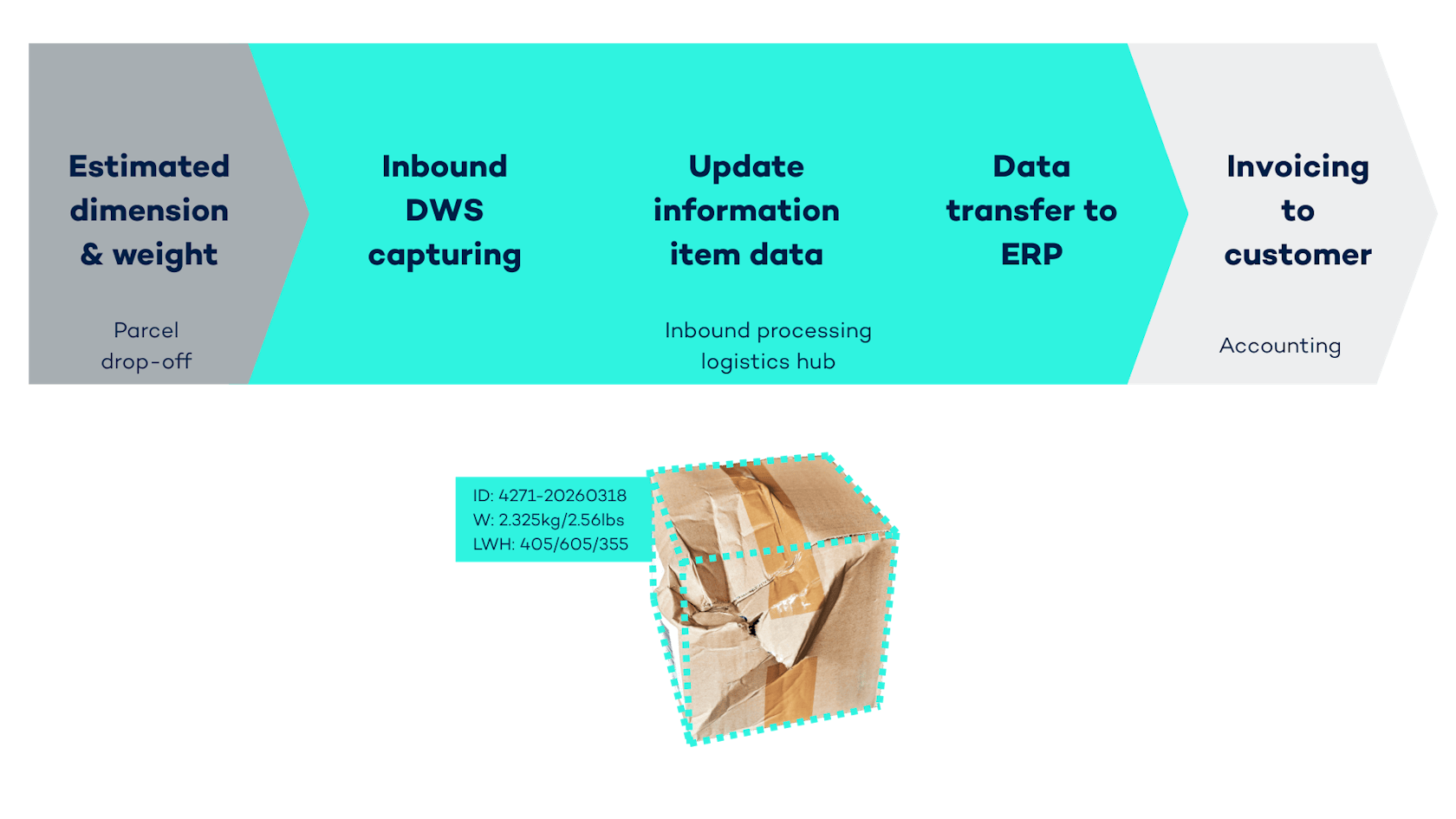
Logistics hubs process thousands to millions of objects each day. If dimensions or weight are inaccurately assigned or missing entirely, revenue is impacted with underbilling, disputes with customers, and internal auditing challenges. Over time, these gaps accumulate into significant revenue leakage. Precise measurement data ensures that every shipment is invoiced correctly, which protects both profitability and customer trust.
Carsten Astner: While cuboidal packages are most common, the real challenge lies in non‑cuboidal, bulky, or irregular items like guitars, snowboards, sports equipment, soft bags, etc. Underestimating these by a few centimeters can lead to significant underbilling.
To prevent this, the advanced dimensioning technologies like in the VITRONIC Volumec HD dimensioner use laser triangulation to capture the irregular shaped item. The dimensioner projects a laser line or pattern onto the packaged object and captures it with calibrated cameras. The exact shape and dimensions are calculated from the deformation of that line in the image, and the resulting point cloud makes it possible to capture irregular geometries with high accuracy, in real time, and at full conveyor speed.
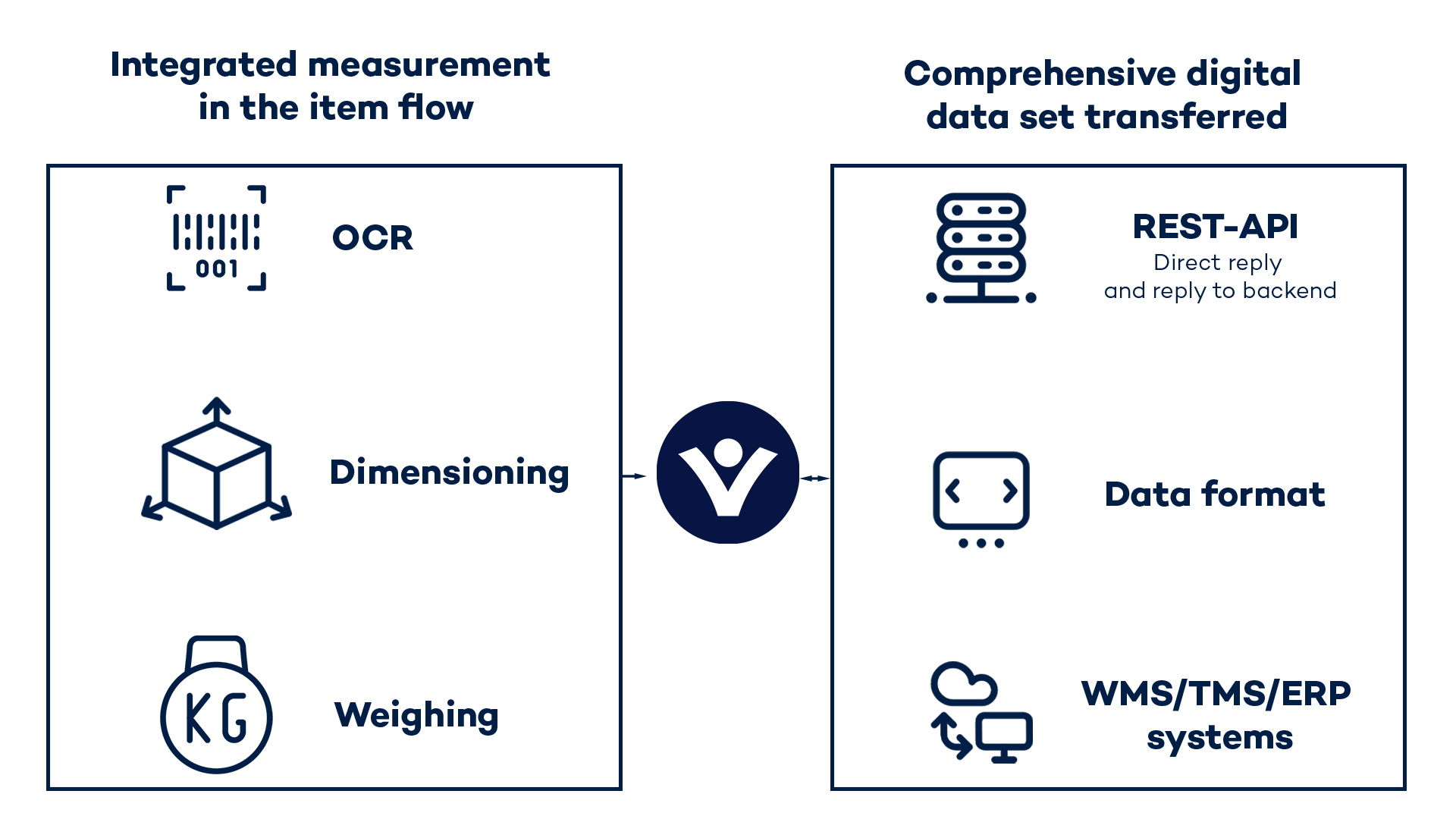
Carsten Astner: To streamline logistics processing times and reduce hardware in hubs with limited space, weighing happens at the same time the barcode or OCR is captured in one continuous flow directly in the conveyor line by including a certified scale.
There is no need for a separate weighing station. Weight and dimensions are recorded together, ensuring that the output reflects the distinct parcel at the moment it is detected. No mismatch, no manual handover, no delays.
Carsten Astner: Legal‑for‑trade certifications exist to ensure that measurements used for billing meet defined metrology standards. For a system to receive its approval, it must undergo a structured certification process that includes laboratory tests, environmental validation, calibration checks, and verification of the complete measurement chain. Only when the measuring principle, hardware, and software work within the defined tolerances under real‑world conditions will an official metrology authority issue the LFT certificate.
For operators, all of this happens by the technology providers before the system arrives. The dimensioning unit, the scale, the optical components, and the software logic are delivered as a certified measuring instrument, not as individual components. This means the system is ready to use for invoicing without requiring operators to apply for approval themselves.
For this reason, our dimensioning and weighing systems are certified according to MID, OIML, and NTEP standards, enabling their use worldwide.
In Short
- Accurate invoicing requires precise dimensions and weight for every parcel.
- Laser triangulation reliably captures irregular or non‑cuboidal shapes.
- Integrated scales provide weight measurements in one continuously automated flow.
- All parcel measurements are linked via unique IDs to accounts and billing systems.
- LFT certified systems simplify compliance, reduce administrative effort, and safeguard revenue.